Bringing green hydrogen to a Malawian hospital: Field notes from Mwanza


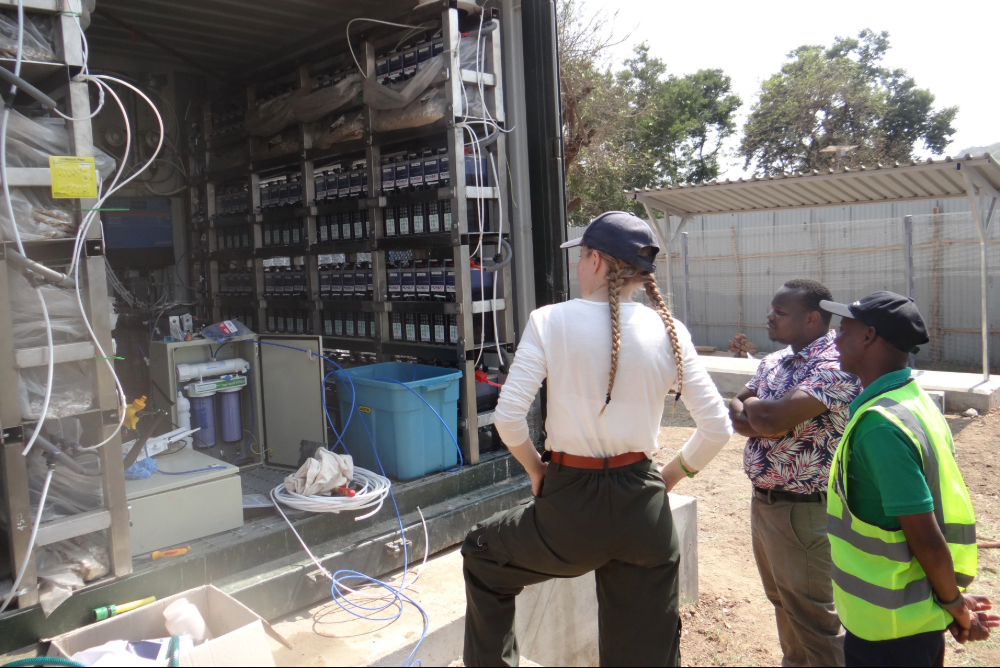
Senior Research Associate Dr Lizzie Ashton with renewable energy engineers and local community members standing in front of the battery-electrolyser test cell, shipped from Loughborough University.
Dr Lizzie Ashton, Senior Research Associate at Loughborough University was awarded one of C-DICE’s final Networking Grants for a project to enable Community Engagement and Training for Hydrogen Energy Adoption in Rural Malawi.
She has just returned from Mwanza District Hospital in Malawi, where she helped commission a containerised battery–electrolyser system developed at Loughborough’s Centre for Renewable Energy Systems Technology.
The work was delivered in close collaboration with INFLO Ltd. and Renew’n’Able Malawi (RENAMA), with the overarching goal of ensuring safe technical operation, establishing long-term local ownership, and building community confidence in hydrogen-based energy. In this blog, Lizzie reflects on the experience of the project.
What the system does
We can store energy produced from solar in batteries that have been designed to also produce hydrogen gas when they are over charged. The system is the first combined battery and electrolyser deployed in a rural healthcare setting in Africa. The electrical energy will provide enough energy for the new kitchen block – replacing the hospital’s previous reliance on firewood and charcoal – the system will provide backup solar energy for lighting, refrigeration, and medical equipment, for two wards, if required.
Technical commissioning
The deployment began with hands-on recovery. Several battery cells were damaged in transit, so my priority was bringing the pack back to full health. That meant careful inspection, cleaning minor acid spillages, restoring electrolyte density, topping up cells, and running controlled charge cycles to remove sulfate and rebalance. While I worked, I turned the process into a live training session for the in‑country INFLO team – demonstrating voltage checks, hydrometer readings, and bubble removal to keep the system stable and uniform.
Next, we focused on water quality – because pure water is the unsung hero of a healthy electrolyser. We installed and tested an automated top‑up line and a four‑stage RODI (reverse osmosis and deionisation) system, then practiced filter changes, push‑fit maintenance, and six‑monthly service routines. The aim wasn’t just to get it running; it was to make it locally maintainable and reliable.
Building local technical capacity was a central objective of the visit
Safety training and capacity building
I worked closely with the teams from INFLO and Renew’n’Able Malawi (RENAMA), delivering practical training on safe handling of diluted sulfuric acid, spill management, routine cell maintenance, compressor operation, nitrogen purging, and interpreting hydrogen and oxygen sensors. We covered calibration of combustible gas detectors (ppm and %LEL), start‑up/shutdown, emergency‑stop recovery, re‑commissioning, and the control logic that governs electrolyser safety trips.
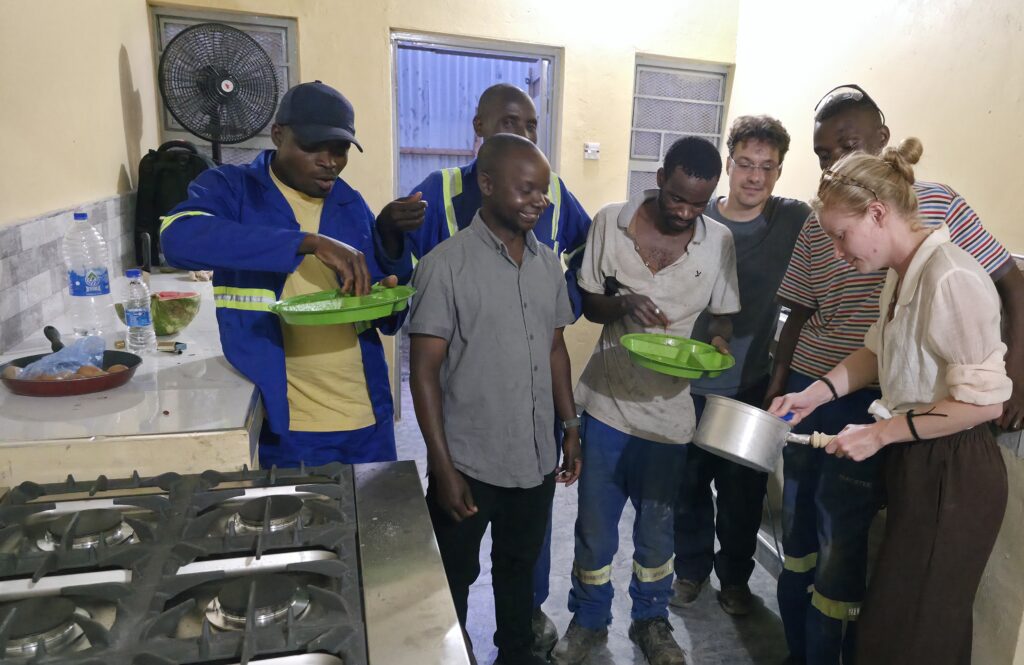
Together, we trained hospital staff in a mix of English and Chichewa, answering questions about leak detection, underground pipeline safety, environmental impacts, and operation during low‑solar days. Being able to point to the system’s safety architecture – hydrogen sensors, inline oxygen sensing, nitrogen purging, automated water top‑up, and interlocks – helped build confidence for day‑to‑day use.
We also ran hydrogen cooking demonstrations with familiar dishes: eggs, nsima, and bean stew. It was a practical way to show the cooker’s safety and performance. I developed a detailed hydrogen cooker manual and arranged a Chichewa translation so staff and patient guardians have clear guidance on hand.
Community engagement
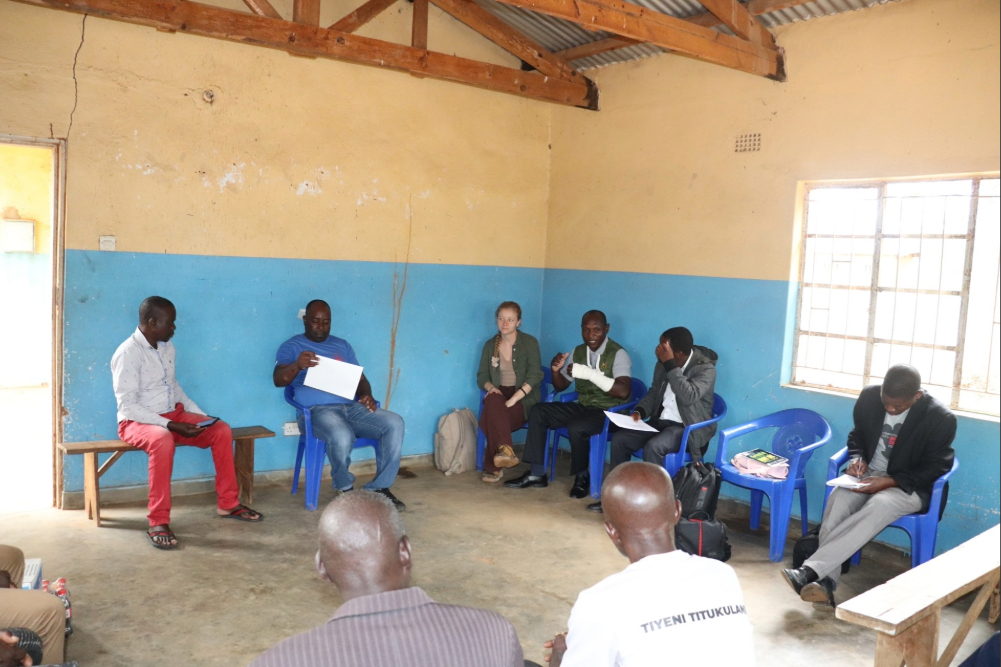
Beyond the hospital, engagement with the wider community was essential. We hosted health science interns from universities across Malawi for system tours, using the setup as a learning platform about hydrogen production, battery storage, and keeping critical services running during blackouts. A pivotal meeting followed with the Senior Chief of the Mwanza region and several Headmen, alongside the Hospital Manager and a Ministry of Health representative. The chiefs asked sharp questions about leaks, pipelines, environmental impact, and night‑time reliability. Their supportive response highlighted the role of traditional leadership in enabling safe, equitable technology adoption.
The visit achieved all technical, educational, and community objectives
This work strengthened relationships with INFLO and RENAMA, and advanced my development as an early‑career researcher – field deployment, safety assurance, and cross‑cultural collaboration. Building on the momentum, we’re forming a consortium with Loughborough University, CBI (Brussels), RENAMA, INFLO, and Hoppecke to pursue European funding that can scale the Mwanza system, extend training, and explore community‑wide clean cooking transitions.
The system is now safely commissioned, fully operational, and supported by a trained local team. If there’s one lesson here, it’s that technology, training, and community must move together to deliver lasting impact. In Mwanza, those pieces are in place – and ready to grow.
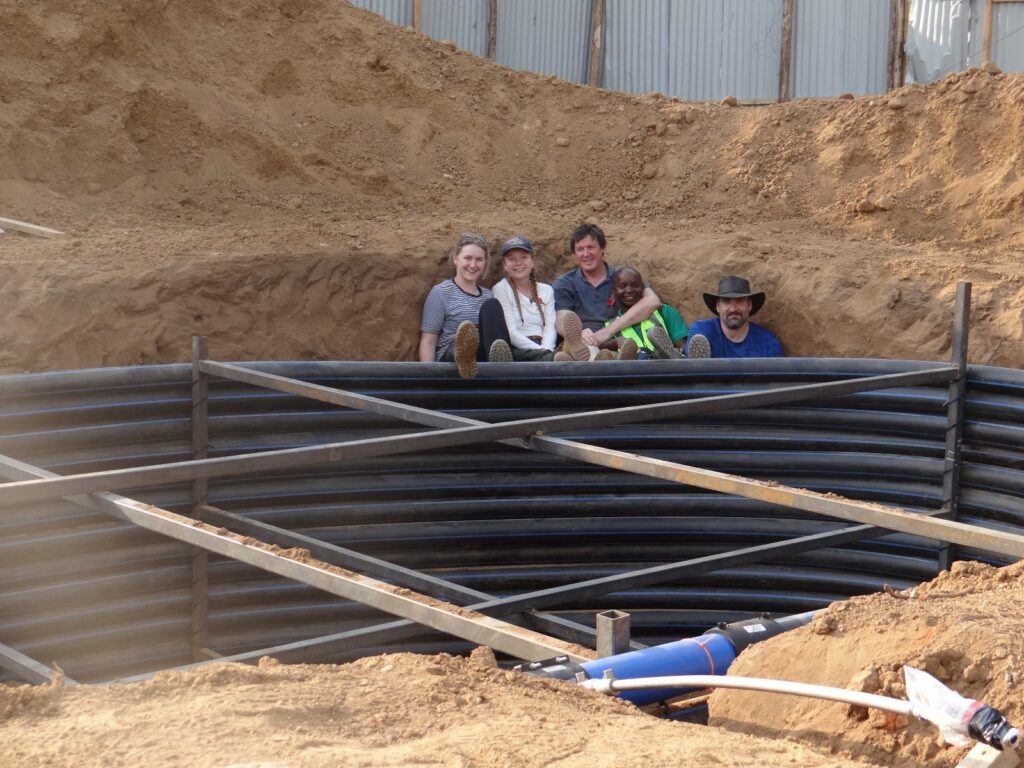
“This has been an absolutely incredible experience that will be a spring board for my career and partnerships with those that I met and worked with whilst in Malawi. We have already started to put together a consortium for possible future funding. I couldn’t be more grateful for this experience.”
By Dr Lizzie Ashton, Senior Research Associate at Loughborough University Centre for Renewable Energy Systems Technology