Helping postdocs build skills, visibility and networks


C‑DICE identified a gap in structured postdoctoral researcher development and by providing a substantial fund for secondments, placements, networking grants, and fellowships, C-DICE helped researchers build skills and visibility, grow networks, and open practical routes into the UK’s net‑zero agenda. This blog shares some of the success stories.
Secondments and placements: embedding expertise to solve real‑world problems
C‑DICE secondments were for short to medium projects and provided salary, travel and subsistence costs so postdocs could fully embed in their host team. Projects were co‑designed to tackle time-bound, real‑world problems and to draw on partner facilities and expertise. Researchers gained sector know‑how and the evidence to move ideas into practice. Hosts gained focused expertise that accelerated priority work with minimal disruption, alongside fresh methods and perspectives that complemented live projects and opened new angles for exploration. Secondments also helped to test collaborations and build a pipeline towards longer‑term projects.
Feedback from host companies was positive; highlighting the understanding and new skills secondees brought, often taking work in valuable, unexpected directions, and sparking future research.
In 2024, Dr Lixu Liu undertook a secondment with Imfuna which provides digital inspection apps AI and machine learning support, and statistical analysis for property and construction. The goal was to create resources that contribute to the growing knowledge base on Reinforced Autoclaved Aerated Concrete (RAAC), including the open access resources Interactive RAAC Hospital Maps and RAAC Documentation Timeline. Since completing the Imfuna secondment, Dr Liu has secured a role as a Digital Planning Researcher at the Digital Task Force for Planning.
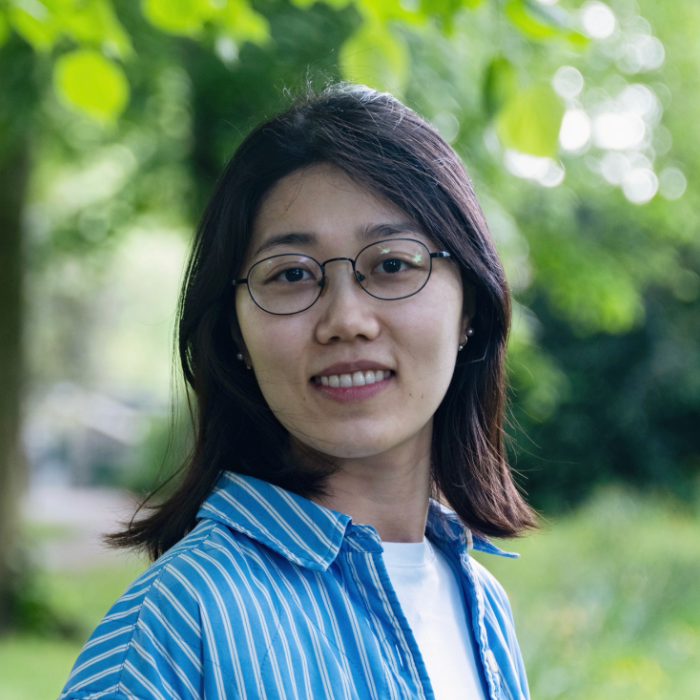
“I would encourage postdocs and early career researchers to consider a secondment as a way to step beyond academia, apply their expertise to real-world challenges, and discover new interests and strengths while making a meaningful impact.”
Dr Byony Bowman, water sector consultant and Research Fellow at the University of Birmingham, was awarded a secondment within C-DICE. The purpose of the secondment was to create a mechanism for measuring avoided carbon emissions in research, but the secondment grew into a framework for other researcher to assess their avoided emissions, a peer-led training session for researchers and the PACER toolkit (coming soon).
Networking grants: building profile and knowledge exchange
Networking was core to C‑DICE. Small, flexible grants turned introductions into collaborations – meeting partners, co‑creating research proposals and transferring techniques that often led to follow‑on funding and durable links.
Designed for speed and access, visits typically lasted up to four weeks with travel, subsistence and consumables covered so researchers could act quickly when opportunities arose. The scheme was deliberately light‑touch to prioritise collaboration and knowledge exchange. C‑DICE also fast-tracked support for researchers with places at COP27 and COP28 to build international connections around net‑zero themes.
Feedback from grant recipients consistently reported that the grants had helped build stronger networks, clearer career direction and greater research profile through research outputs including publications.
Dr Rodolfo Teixeira, Research Fellow, Chemical Engineering, Loughborough University, used his networking grant to form a partnership with the Federal University of Rio de Janeiro on sustainable manufacturing inspired by tropical biodiversity, which aims to advance sustainable, nature-inspired materials for greener chemical manufacturing. The collaboration has recently resulted in a new research publication.
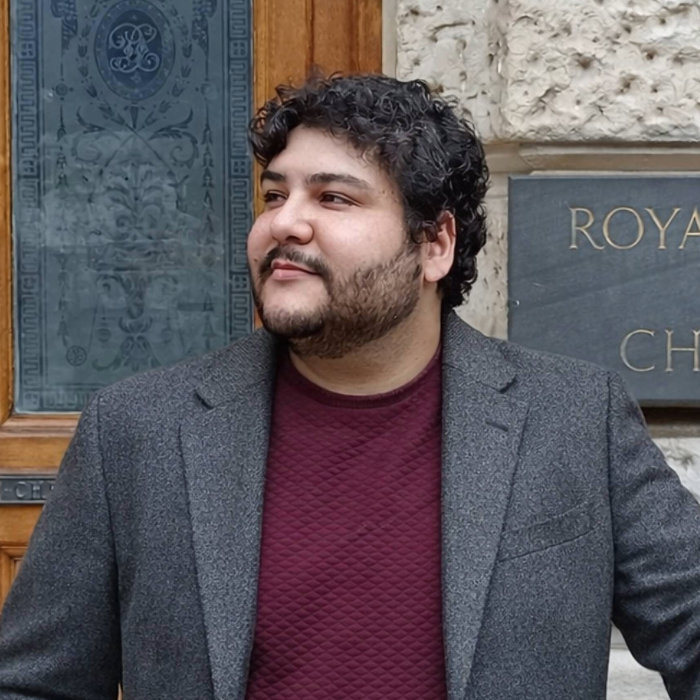
“The C-DICE networking grant was essential in supporting and seeding my international collaboration which opens new possibilities for the development of naturally derived quinones in sustainable manufacturing and future clean energy applications, including solar fuel generation.”
Similarly, Dr Lizzie Ashton benefitted from a C-DICE networking grant to take a trip to Malawi to enable community engagement and training for hydrogen energy adoption in rural Malawi, where she helped commission a containerised battery–electrolyser system developed at Loughborough’s Centre for Renewable Energy Systems Technology.

“This has been an absolutely incredible experience that will be a springboard for my career and partnerships with those that I met and worked with whilst in Malawi. We have already started to put together a consortium for possible future funding. I couldn’t be more grateful.”
Fellowships: building leadership and policy fluency
Fellowships were a key activity in C-DICE’s mission to support researchers to become independent research leaders. C‑DICE fellowships were up to a year-long project, flexible and had the support of a network of fellows as well. Furthermore, C-DICE also awarded two three-month fellowships in the Parliamentary Office of Science and Technology (POST) within the Energy Security and Net Zero (ESNZ) Select Committee, strengthening scientific communication skills and providing insight into how POST, select committees and all‑party parliamentary groups use evidence. The C-DICE POST Fellows were Dr Shivangi Sharma, Senior Research Fellow at the Birmingham Energy Institute, University of Birmingham, and Dr Humera Ansari, who secured a role as a Senior Policy Advisor at the Department for Energy Security and Net Zero, in August 2024.

“I absolutely loved my time as a POST Fellow. The fellowship gave me a unique insight into how science and policymaking interact in practice and exposed me to the full breadth of the UK’s energy system, far beyond my own research specialism. One of the most valuable skills I developed was learning how to translate complex technical evidence into clear, accessible writing for non‑technical audiences. It was an incredibly rewarding experience and played a key role in shaping my move into energy policy.”
“My time as a POST Fellow has been a highly formative experience in working at the interface of research and policy, and I’ve felt consistently supported by both POST and C-DICE throughout. Overall, the fellowship has enabled me to actively bridge the gap between academic research and policymaking and has been instrumental in shaping my ongoing focus on policy-engaged, impact-driven research.”
What worked – and why
Modest, well‑scoped mobility and networking funding works when it is delivered quickly and anchored to mission‑driven partners and facilities. Through industry secondments, placements, networking grants and targeted fellowships, we accelerated research, built skills and visibility, expanded networks, and opened practical routes into the UK’s net‑zero agenda. The case studies (and evaluation evidence) speak for themselves. Flexibilty and inclusivity were also core to the programmes’ design, on the basis that researchers’ ability to engage varies according to contracts and situations.
With thanks
Our sincere thanks to the postdoctoral community who engaged with the C-DICE secondments, placements, networking grants, and fellowships. By stepping into new teams and contexts, you delivered practical results and built lasting links; we hope the experience serves you well as you move forward. We also thank the host organisations across industry, policy and academia, and our partners whose collaboration made these opportunities possible and supported delivery.